Have you wondered that a luxury cosmetic packaging design can make your brand filled with recurring customers. A luxury box should feel considered before the customer even opens it. The corners hold their shape, the lettering reads clearly, and the bottle stays in place during delivery.
Those details help luxury cosmetic packaging support the price and promise of the product inside. Extra layers and expensive finishes only help when they serve that purpose.
For your 2027 collection, when minimalistic approach and maximalist approach is out there among buyers, you should focus on materials, structure, and artwork that suit your products. These six luxury cosmetic design ideas cover premium cosmetic boxes. They highlight what should be kept in luxury skincare packaging. We will delve deep in custom makeup packaging, with one brand example for each approach.
1. Minimalist Luxury Cosmetic Packaging With Texture
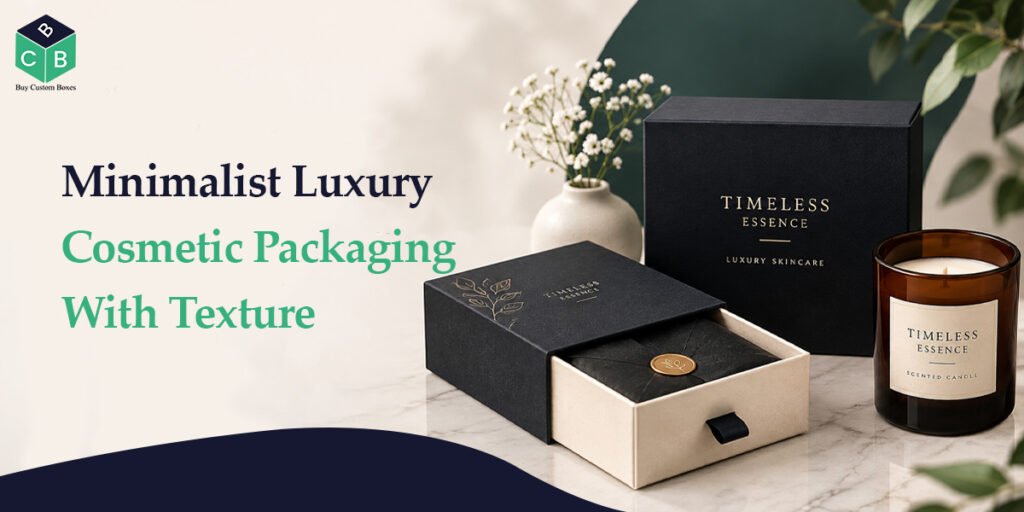
Simple artwork makes every production detail easier to notice. Uneven printing, weak folds, and crowded lettering become obvious when there is little else on the carton. A luxury cosmetic design should complement the approach that’s sought-after as Gen Z rely on cosmetics that don’t have loud graphics but meaningful minimalistic designs.
Start with a readable product name and enough space around it. Keep the front panel focused. It is best to organize supporting information across the remaining panels.
Soft pink, ivory, sage, works well. While also burgundy,and forest green can all work. Choose a color palette responsibly. After sending a PR box to influencers you can receive feedback from them. You should pick a box that feels familiar across your collection. Being peculiar with packaging needs everyday resonance also while making individual formulas for your opulent cosmetic packaging and product lines, limited editions easy to identify.
Soft-touch coatings or laminations add a velvety feel to premium cosmetic packaging. Ask your printer which treatment suits the stock, budget, and disposal requirements. For finishes of luxury cosmetic box packaging you can check physical samples for fingerprints and marks around folds.
Embossing raises a logo or pattern, while debossing presses it into the surface. Both add texture without requiring another ink color. Fine details need testing on the chosen paperboard.
Brand example: Glossier. Use Lash Slick as a reference when exploring a restrained product identity. Study the balance of naming, color, and spacing, then create an original layout for your collection.
2. Rigid Cosmetic Boxes for Gift Sets
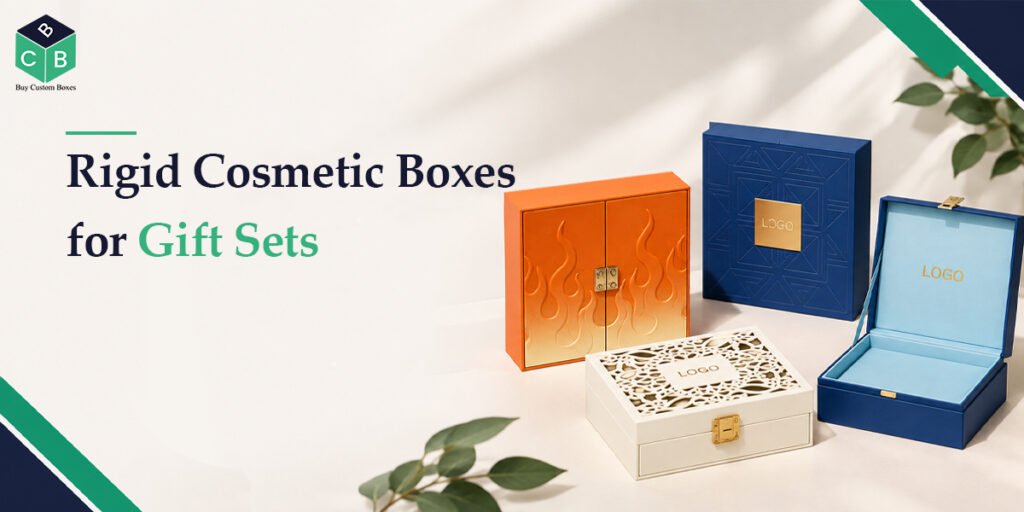
Rigid boxes give fragrance collections and skincare sets a substantial presentation. They also add weight and occupy storage space, so compare the complete cost before choosing them.
A magnetic closure can make a hinged box comfortable to open and close. Check the lid alignment and magnet strength. Customers should never have to pull hard at the corners.
Inside, custom inserts, there can be added sleeves, custom chipboard inserts that protect inside products. They keep glass bottles, droppers, and compacts from moving. Paperboard, molded pulp, and foam offer different levels of support and cushioning. Choose around the actual product weight and fragility.
You can include finger notches, ribbon pulls or pull tabs so items lift out easily. A tight insert should hold the product securely without making removal frustrating.
The inside lid can carry an application sequence, short welcome, or useful product explanation. Keep longer stories on a separate card.
Brand example: Fenty Beauty. Its lip gloss vault offering provides a reference for grouping related products. For your luxury cosmetic gift boxes, plan a layout that lets customers identify and remove each item easily.
3. Sustainable Cosmetic Packaging With Practical Material
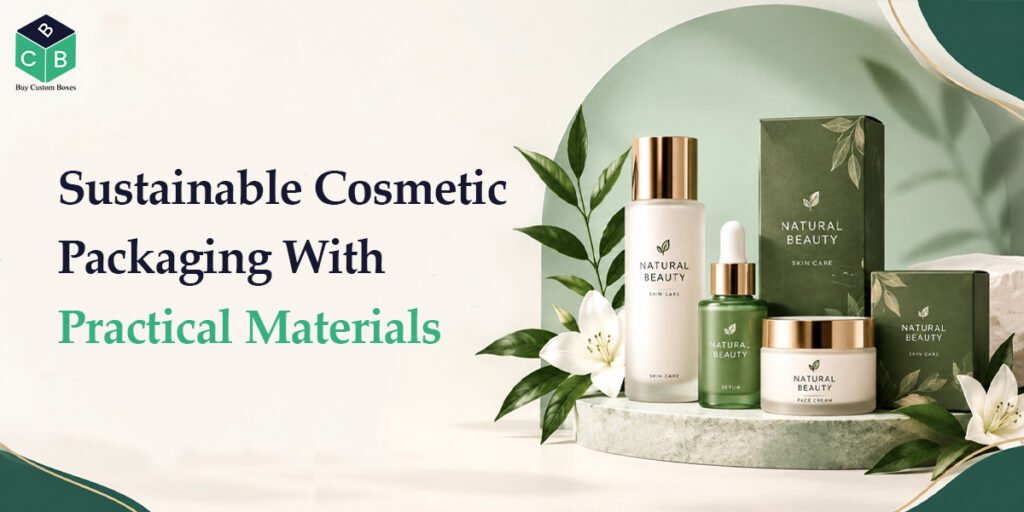
Begin by removing unnecessary space. A closely fitted carton with a suitable insert can reduce material use while keeping the presentation neat.
Recycled paperboard comes in different textures and printable surfaces. Ask suppliers to confirm the recycled content, including the proportion from post-consumer sources. Check printed samples for consistency across the collection.
FSC-certified paperboard is another sourcing option. FSC 100%, FSC Mix, and FSC Recycled describe different categories, so confirm the applicable label before including it in your artwork.
SBS, or solid bleached sulfate paperboard, offers a smooth surface for detailed printing. Discuss the right grade and thickness for your luxury skincare packaging rather than choosing by appearance alone.
Vegetable-based inks and water-based coatings are worth discussing with your printer. Their suitability depends on the formulation and finished structure. Ink choice alone cannot establish recyclability.
Brand example: Tower 28 Beauty. The brand specifies 50% post-consumer recycled plastic for ShineOn packaging. Although that refers to a product container, it demonstrates how clear material information can support a sustainable packaging claim.
4. Foil and Tactile Finishes for Premium Cosmetic Boxes
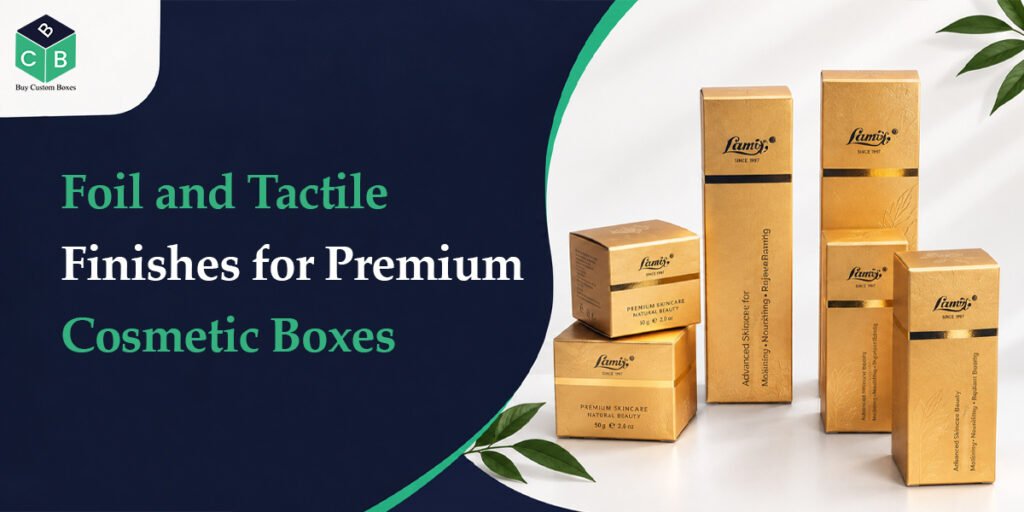
Decide what customers should notice first. A finish can highlight a name, bring a pattern forward, or help distinguish a special collection. Tactile finishes are among the top tier approaches that customers will feel on your cosmetic packaging when they have first interaction with your box.
Gold, silver, champagne, and rose gold foil work well on selected details. Ask about minimum line thickness before finalizing delicate lettering or illustrations.
Holographic effects offer another direction for luxury makeup packaging. Check them under different lighting and through a phone camera. Reflections should leave product names and shade information readable.
Raised spot UV adds glossy texture to selected artwork. It can create contrast against a matte surface, but essential instructions should remain clear without depending on the effect.
Blind embossing adds a raised design without ink or foil. Approve a physical sample to see how well your paper holds the detail.
Brand example: PAT McGrath Labs. Include Dark Star Mascara in your references when developing expressive beauty packaging. Use the product presentation as creative inspiration, then confirm your own board and finish specifications with the manufacturer.
5. Custom Shapes, Windows, and Drawer Packaging
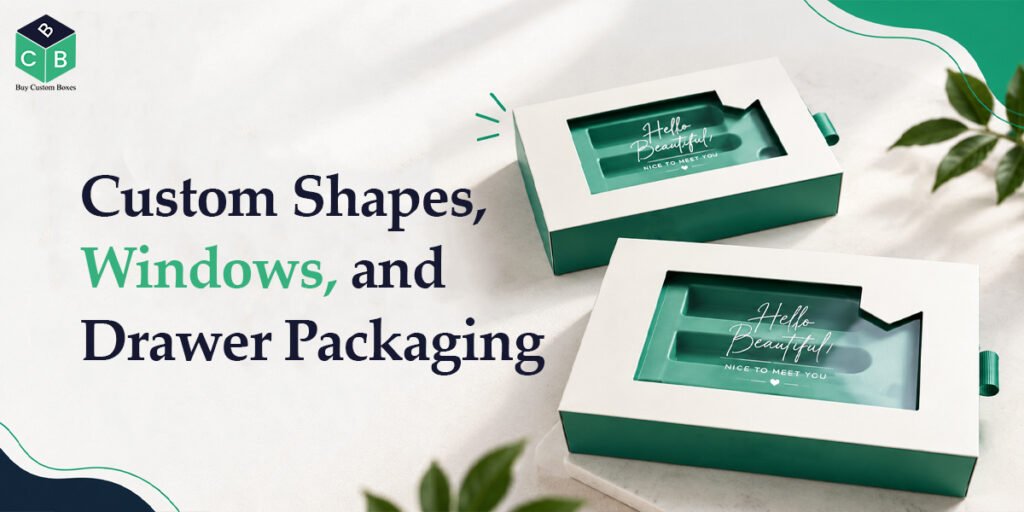
An unusual structure needs to work on a shelf and inside a shipping carton. Request a structural sample before refining the artwork.
Die-cut windows can reveal a bottle, compact, or visible shade. Place the opening where it helps customers choose. An opaque container will still hide the formula, regardless of window size.
If adding clear film, ask whether it separates easily from the board and how customers should dispose of it. A PET window does not automatically make the complete carton curbside recyclable.
Hexagonal and other shaped boxes can give luxury perfume packaging a distinctive outline. Check stability, assembly time, and freight space before committing.
Drawer boxes suit palettes, lip kits, and skincare trios. The tray should slide smoothly while staying secure during handling.
Brand example: Kylie Cosmetics. Its Matte Lip Kit is a useful reference for presenting complementary products together. For your custom cosmetic boxes, consider a sleeve and tray with each shade labeled beside its product.
6. Personalized Cosmetic Packaging With Useful Digital Features
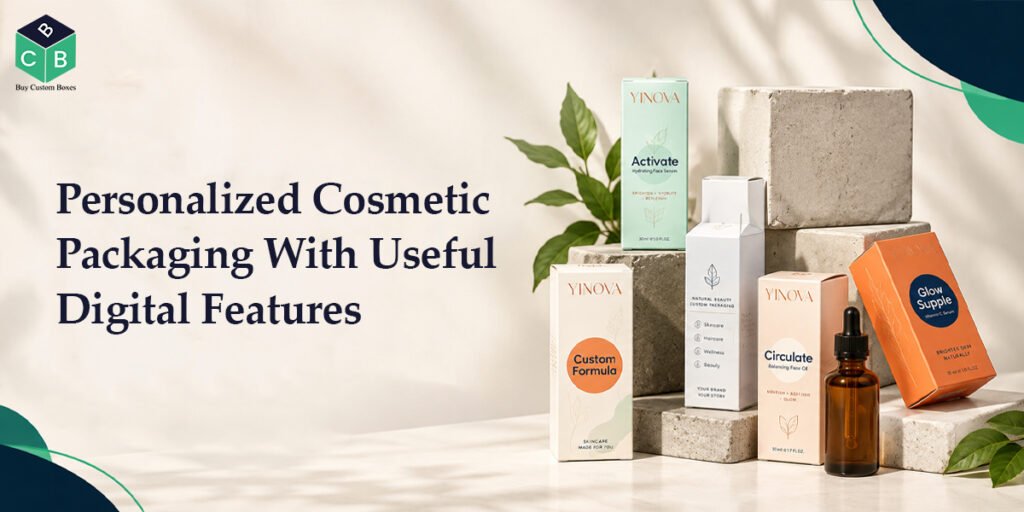
Personalization should give the customer something useful or memorable. A gift message, application guide, or refill link can serve a clear purpose.
Place QR codes on a side panel, base, or inside lid with a short explanation of what they open. Test the final printed code for size, contrast, and scanning reliability.
NFC tags can connect compatible phones to information with a tap. Authentication needs a proper verification system; opening a webpage alone does not prove authenticity.
Custom sleeves, printed names, and foil monograms can adapt existing boxes for seasonal gifting and press kits. Confirm setup charges, minimum quantities, and packing time before offering personalization.
Brand example: Milk Makeup. Use its KUSH range as a reference for keeping a product family recognizable. Apply that principle to personalized sleeves: preserve the core identity while changing the message. This is a design suggestion, not a claim about Milk’s digital features.
Specifications to Confirm Before Ordering
For folding cartons, discuss SBS, kraft, or recycled paperboard. A 14–24 pt range can start the conversation, but the product and structural sample should determine the final specification.
For rigid cosmetic boxes, confirm board thickness, wrapping, inserts, and total shipping weight. Compare finish samples and quotes at several quantities.
Get a schedule covering sampling, revisions, production, and freight. Minimum orders and turnaround times depend on the supplier and design.
Ask who will assemble the boxes and pack the products. Small details, such as an awkward insert or a sleeve that catches, can slow down every order. Have the packing team handle the sample before approval. Their feedback can help you resolve problems while changes are still straightforward and less expensive to make.
Bring Your Cosmetic Packaging Luxury Designs and Turn Them Into Production
Send your manufacturer the product dimensions, weight, quantity, budget, and launch date. Include references explaining what you like.
Approve a printed, packed sample. Open it, remove the product, replace it, and inspect the finish. The packaging needs to feel right in your customer’s hands. Let Buy Custom Boxes handle your luxury cosmetic packaging in a befitting way. Get started and discuss your cosmetic design project with us. Our free design support low MOQs will make the ordering procedure seamless.
Frequently Asked Questions
Which material suits luxury cosmetic packaging?
SBS suits detailed printing, recycled board offers varied surfaces, and wrapped rigid board suits substantial gift sets. Choose around protection, presentation, and budget.
Can premium cosmetic boxes be recyclable?
Yes, but assess the complete package, including coatings, films, inserts, and closures. Confirm suitable recycling options before printing disposal claims.
How can smaller brands control costs?
Start with a standard structure, clear artwork, and a close product fit. Compare plain printed samples with one decorative finish before deciding where to spend.